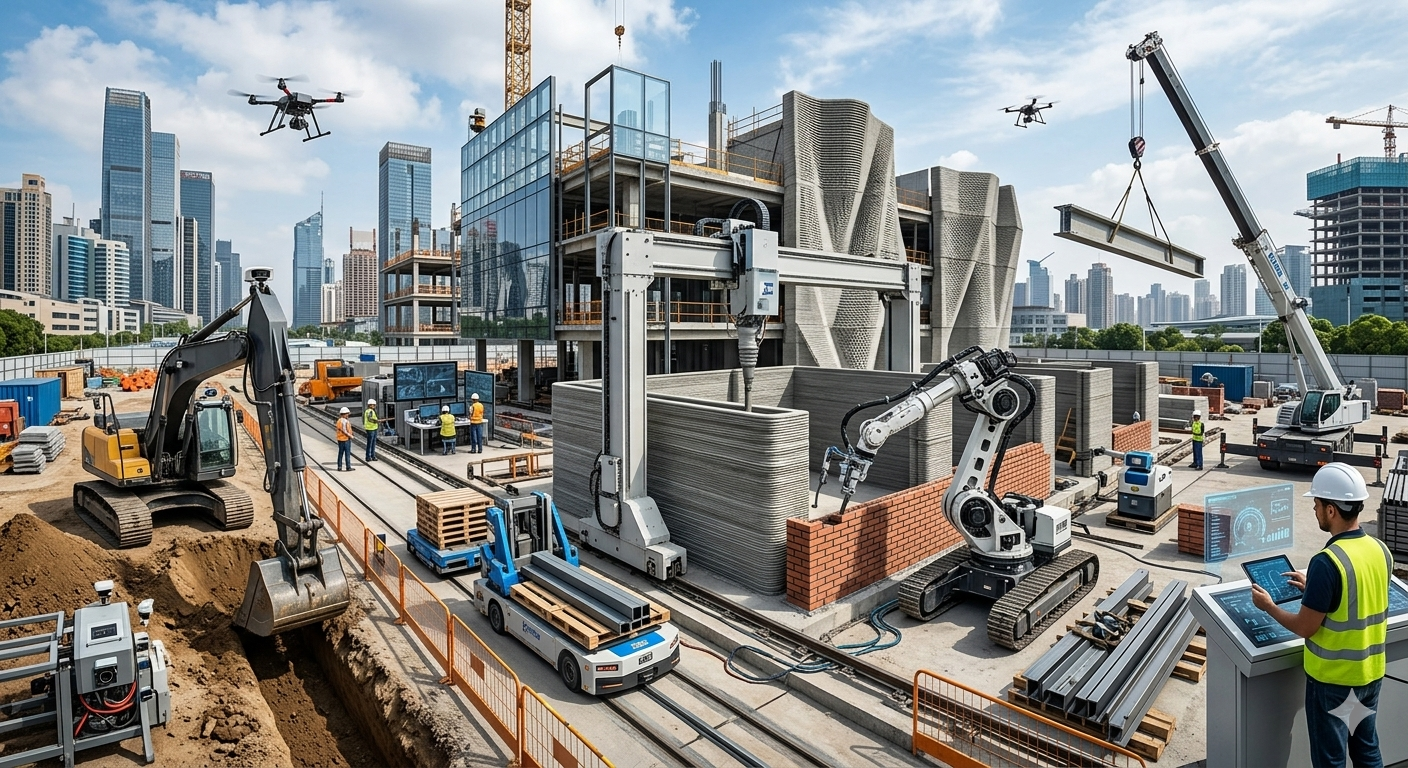
The construction industry is experiencing a technological revolution. Automation and robotics are transforming traditional construction methods, enhancing efficiency, safety, and precision on job sites. From robotic bricklaying to drones surveying sites, these innovations are reshaping the way we plan, build, and manage construction projects.
What Is Automation and Robotics in Construction?
Automation in construction refers to using machines and software to perform tasks that were traditionally done manually. Robotics involves programmable machines that can execute complex construction tasks autonomously or semi-autonomously. Together, they aim to improve productivity, reduce human error, and ensure worker safety.
Key areas include:
- Robotic Machinery – Autonomous bricklaying, concrete pouring, and welding robots.
- Drones – For aerial surveys, progress monitoring, and safety inspections.
- 3D Printing – Creating building components and even entire structures with precision.
- Exoskeletons – Wearable devices that enhance workers’ strength and reduce fatigue.
- Construction Management Software – Automated scheduling, budgeting, and resource allocation.
Benefits of Automation and Robotics in Construction
Adopting robotics and automation offers numerous advantages for contractors, clients, and workers:
- Enhanced Productivity – Robots can work continuously with consistent output, reducing project timelines.
- Improved Safety – Dangerous tasks like high-rise construction or heavy lifting can be delegated to machines.
- Precision and Quality – Automated machinery ensures accurate measurements and consistent construction quality.
- Cost Efficiency – Although initial investments may be high, long-term savings come from reduced labor costs and fewer errors.
- Data-Driven Decisions – Smart sensors and software provide real-time insights, optimizing resource allocation and project planning.
Innovative Robotics Applications in Construction
Modern technology has enabled a variety of robotics applications that are reshaping the construction landscape:
- Bricklaying Robots – Machines like SAM100 can lay thousands of bricks daily, drastically reducing manual labor.
- Concrete 3D Printers – Print entire walls or structural components, minimizing waste and speeding up construction.
- Autonomous Excavators – Self-driving machines for earthmoving, trenching, and site preparation.
- Inspection Drones – Survey hard-to-reach areas safely while capturing accurate, real-time data.
- Exoskeleton Suits – Help workers lift heavy objects with reduced strain and risk of injury.
Challenges in Implementing Automation
While the benefits are substantial, automation and robotics in construction also face challenges:
- High Initial Costs – Advanced robotics and automation systems require significant investment.
- Skilled Workforce Requirement – Operators and technicians must be trained to manage automated systems.
- Integration Complexity – Robotics must seamlessly integrate with traditional workflows and existing software.
- Maintenance and Reliability – Machines require regular maintenance and can experience technical failures.
Despite these challenges, the long-term benefits of automation, safety, and productivity far outweigh the hurdles, making it a strategic investment for forward-thinking construction companies.
Case Studies of Robotics in Construction
- Dubai’s 3D-Printed Office – The first fully functional 3D-printed office building, reducing material waste and construction time.
- Robotic Bricklaying in Europe – SAM100 has been used on multiple commercial projects, achieving high precision and speed.
- Drone Monitoring in the USA – Companies use drones for large-scale project surveillance, minimizing accidents and delays.
The Future of Automation in Construction
The future of construction is smart, automated, and data-driven. Advancements in AI, machine learning, and robotics will enable fully autonomous construction sites, where machines handle repetitive or dangerous tasks while humans focus on strategic planning and creative problem-solving.
Construction companies that embrace automation and robotics will enjoy faster project completion, improved quality, and safer work environments, positioning themselves at the forefront of the industry.
Conclusion
Automation and robotics are no longer futuristic concepts—they are integral to modern construction. By integrating smart machines, drones, and software, construction companies can improve efficiency, reduce risks, and achieve higher-quality outcomes. The technological revolution in construction is here, and companies that adopt these innovations will lead the way into a safer, faster, and smarter future.

Leave a Reply