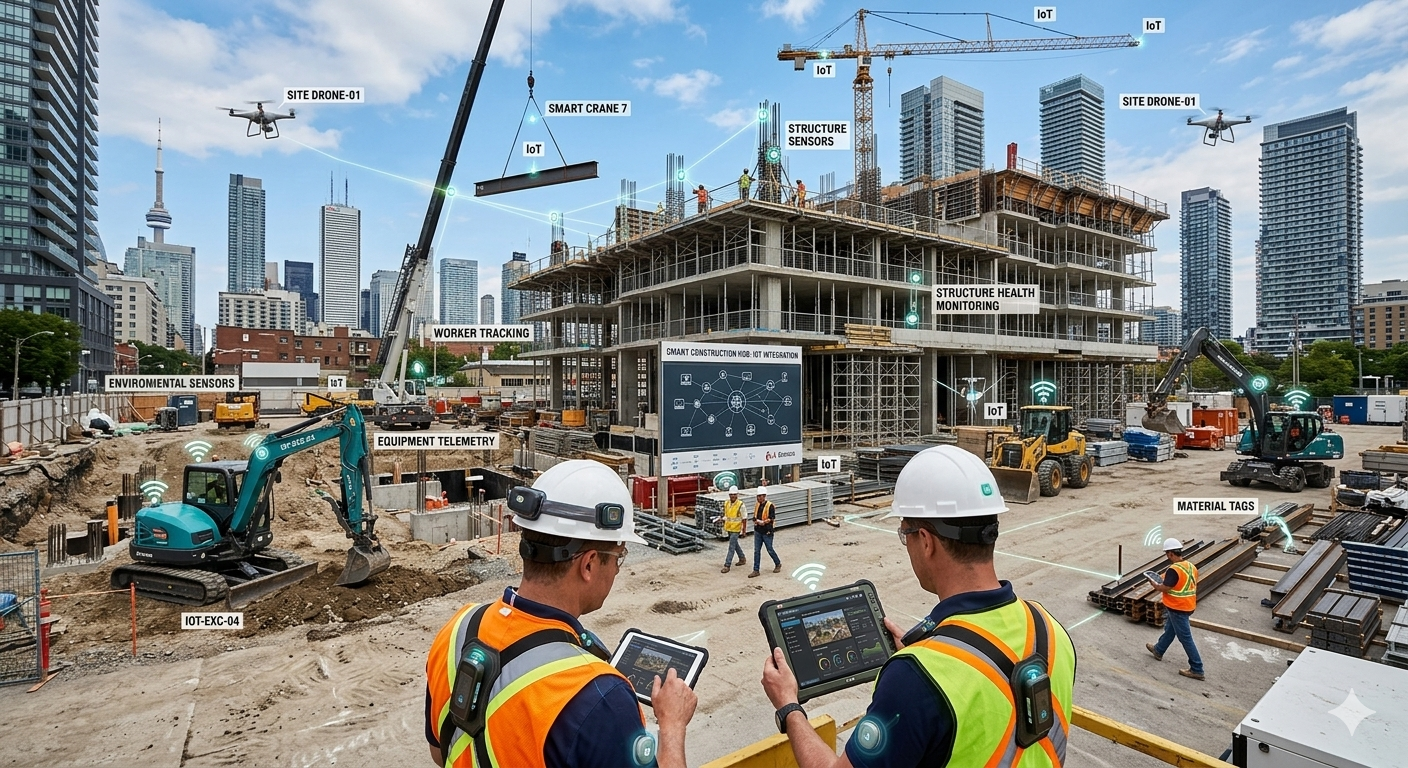
The construction industry is rapidly evolving with the integration of Internet of Things (IoT) technology. Smart construction sites leverage IoT devices, sensors, and real-time data analytics to improve project efficiency, safety, and cost management. By connecting machinery, materials, and personnel, IoT transforms traditional construction sites into highly intelligent, data-driven environments.
What Are Smart Construction Sites?
A smart construction site is a digitally connected workspace where all equipment, materials, and personnel are monitored and managed using IoT-enabled devices. These systems provide real-time insights, predictive analytics, and automation capabilities, allowing companies to make data-driven decisions that optimize every aspect of construction.
Key components include:
- IoT Sensors – Monitor temperature, humidity, structural health, and equipment status.
- Wearable Devices – Track worker location, fatigue levels, and safety compliance.
- Connected Machinery – Equipment communicates status, maintenance needs, and performance metrics.
- Smart Project Management Platforms – Integrate IoT data for scheduling, budgeting, and reporting.
- Automated Alerts and Notifications – Instant warnings for safety hazards, equipment malfunctions, or delays.
Benefits of IoT in Construction
Integrating IoT technology in construction sites offers several benefits:
- Enhanced Safety – Wearable devices detect falls, monitor hazardous zones, and ensure compliance with safety protocols.
- Real-Time Monitoring – Supervisors can track progress, machinery performance, and material usage instantly.
- Reduced Downtime – Predictive maintenance alerts prevent equipment breakdowns, ensuring smooth operations.
- Cost Optimization – Real-time tracking of resources reduces wastage and improves budget management.
- Data-Driven Decisions – Analytics from IoT devices guide better planning, risk management, and project forecasting.
Innovative IoT Applications in Construction
Modern construction projects increasingly rely on IoT solutions to streamline operations:
- Structural Health Monitoring – Sensors embedded in buildings detect stress, vibrations, or potential failures early.
- Smart Inventory Management – Track materials, tools, and machinery usage to reduce losses and optimize supply chains.
- Worker Safety Wearables – Smart helmets, vests, and wristbands monitor vital signs, location, and environmental risks.
- Fleet Management Systems – Monitor construction vehicles, optimize routes, and improve fuel efficiency.
- Energy and Environment Monitoring – IoT devices measure energy consumption, air quality, and environmental conditions on site.
Challenges of Implementing IoT in Construction
While the advantages are significant, IoT adoption in construction comes with challenges:
- High Initial Investment – Advanced sensors, software, and network infrastructure can be expensive.
- Data Security Concerns – Connected devices are susceptible to cyber threats if not properly secured.
- Technical Expertise Requirement – Skilled personnel are needed to manage and analyze IoT data.
- Integration Complexity – Combining IoT systems with existing workflows and machinery can be challenging.
Despite these challenges, the long-term benefits of improved safety, efficiency, and cost savings make IoT a strategic investment for construction companies.
Case Studies of Smart Construction Sites
- Skanska’s Smart Buildings in Europe – Implementing IoT sensors for structural monitoring and predictive maintenance.
- Drones and IoT in the USA – Using drones with connected sensors for site mapping, safety monitoring, and progress tracking.
- IoT-Enabled Modular Construction – Real-time tracking of prefabricated modules and resource allocation on large-scale projects.
The Future of IoT in Construction
The future of construction is connected, automated, and intelligent. Advanced AI-powered analytics, robotics integration, and IoT-enabled smart systems will allow construction companies to anticipate issues, optimize resources, and enhance productivity. IoT will not only improve project efficiency but also create safer, more sustainable, and smarter construction environments.
Conclusion
Smart construction sites with IoT integration represent a transformative shift in the construction industry. By connecting machines, materials, and personnel, construction companies can leverage real-time insights, predictive analytics, and automation to optimize every aspect of a project. Embracing IoT technology is no longer optional—it is the future of safe, efficient, and intelligent construction management.

Leave a Reply