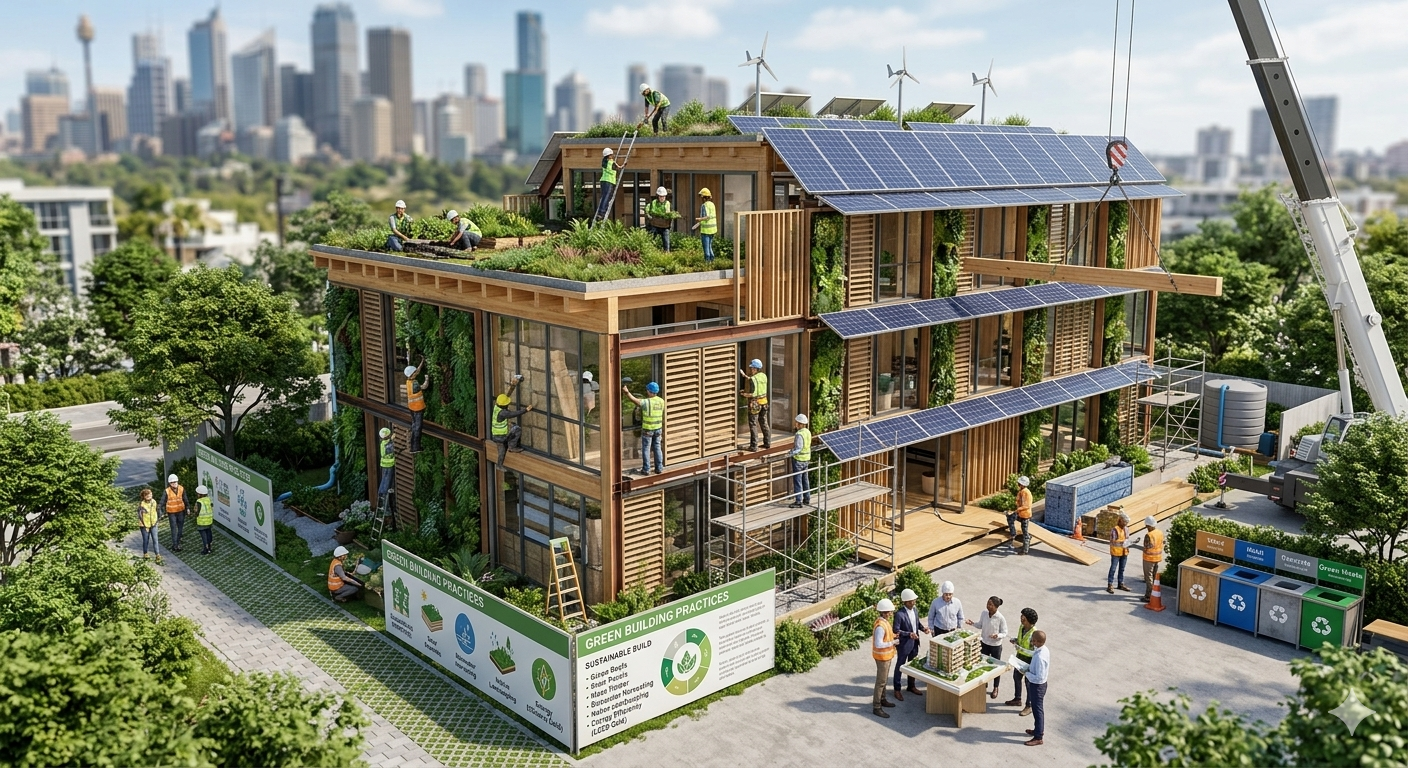
In today’s construction industry, sustainability and eco-friendly practices are no longer optional—they are essential. With increasing environmental concerns and stricter regulations, green building practices are reshaping the way we design, plan, and construct buildings. At the core of this transformation lies a commitment to reducing carbon footprints, conserving resources, and enhancing energy efficiency.
What Are Sustainable and Green Building Practices?
Sustainable building practices involve designing and constructing buildings that minimize negative environmental impacts. This includes using renewable materials, energy-efficient systems, and water-saving technologies. Green building emphasizes not only environmental sustainability but also healthier indoor environments for occupants and long-term cost savings for owners.
Some of the key principles include:
- Energy Efficiency – Utilizing solar panels, high-performance insulation, and smart lighting to reduce energy consumption.
- Water Conservation – Implementing low-flow fixtures, rainwater harvesting, and greywater recycling.
- Sustainable Materials – Using recycled steel, bamboo, reclaimed wood, and other eco-friendly construction materials.
- Waste Reduction – Minimizing construction waste through careful planning, recycling, and modular building techniques.
- Indoor Environmental Quality – Ensuring good ventilation, natural lighting, and non-toxic materials for healthier living spaces.
Benefits of Green Construction
Implementing sustainable construction practices offers numerous advantages for builders, clients, and the environment:
- Environmental Impact Reduction – Reduced energy consumption and carbon emissions contribute to combating climate change.
- Cost Savings – Energy-efficient buildings lower utility bills and maintenance costs over the building’s lifetime.
- Enhanced Occupant Health – Using non-toxic materials and improving air quality promotes better health and productivity.
- Regulatory Compliance – Many countries now require buildings to meet environmental standards, making sustainability a necessity.
- Increased Property Value – Green buildings often attract higher resale value and appeal to eco-conscious buyers.
Innovative Sustainable Construction Techniques
Modern construction leverages cutting-edge technologies to implement green building practices:
- 3D Printing in Construction – Reduces material waste and allows for innovative, resource-efficient designs.
- Solar-Powered Systems – Integrating photovoltaic panels and solar water heaters to minimize reliance on non-renewable energy.
- Modular Construction – Prefabricated units reduce on-site waste and shorten construction timelines.
- Smart Building Automation – IoT sensors monitor energy use, lighting, and HVAC systems for optimized efficiency.
- Green Roofs and Vertical Gardens – Enhance insulation, reduce heat absorption, and improve air quality in urban areas.
Challenges in Adopting Sustainable Practices
While the benefits are significant, construction companies face challenges in fully adopting green building practices:
- High Initial Costs – Sustainable materials and technologies can require higher upfront investment.
- Limited Awareness – Builders and clients may lack knowledge about eco-friendly options.
- Regulatory Complexity – Compliance with environmental standards varies across regions, making implementation difficult.
- Supply Chain Constraints – Access to sustainable materials may be limited in some areas.
Despite these challenges, the long-term advantages far outweigh the initial hurdles, making green construction a smart investment for the future.
Case Studies of Sustainable Construction
- LEED-Certified Commercial Buildings – Many commercial projects worldwide have achieved LEED certification through energy-efficient HVAC systems, sustainable materials, and water-saving technologies.
- Zero-Energy Homes – Residential buildings designed to produce as much energy as they consume using solar panels, passive heating, and high-performance insulation.
- Eco-Friendly Skyscrapers – Modern urban towers integrating green terraces, rainwater collection, and advanced waste management systems.
The Role of Professionals in Green Building
To achieve sustainable construction goals, skilled professionals are essential:
- Architects design buildings with passive solar heating, efficient layouts, and eco-friendly materials.
- Engineers implement structural and mechanical systems that optimize energy efficiency.
- Project Managers ensure that sustainability principles are followed throughout construction.
- Contractors and Labour Teams adopt safe, environmentally responsible construction practices on-site.
Future of Sustainable Construction
The future of construction is undeniably green. As technology evolves, we will see more smart, energy-efficient, and environmentally conscious buildings. The integration of AI, machine learning, and renewable energy technologies will further streamline green construction, making it more affordable and accessible.
Investing in sustainable building practices today ensures a healthier planet, safer working environments, and economic advantages for years to come. By prioritizing energy efficiency, resource conservation, and innovative construction techniques, we can transform the construction industry into a sustainable force for global progress.

Leave a Reply